Oversight Actions
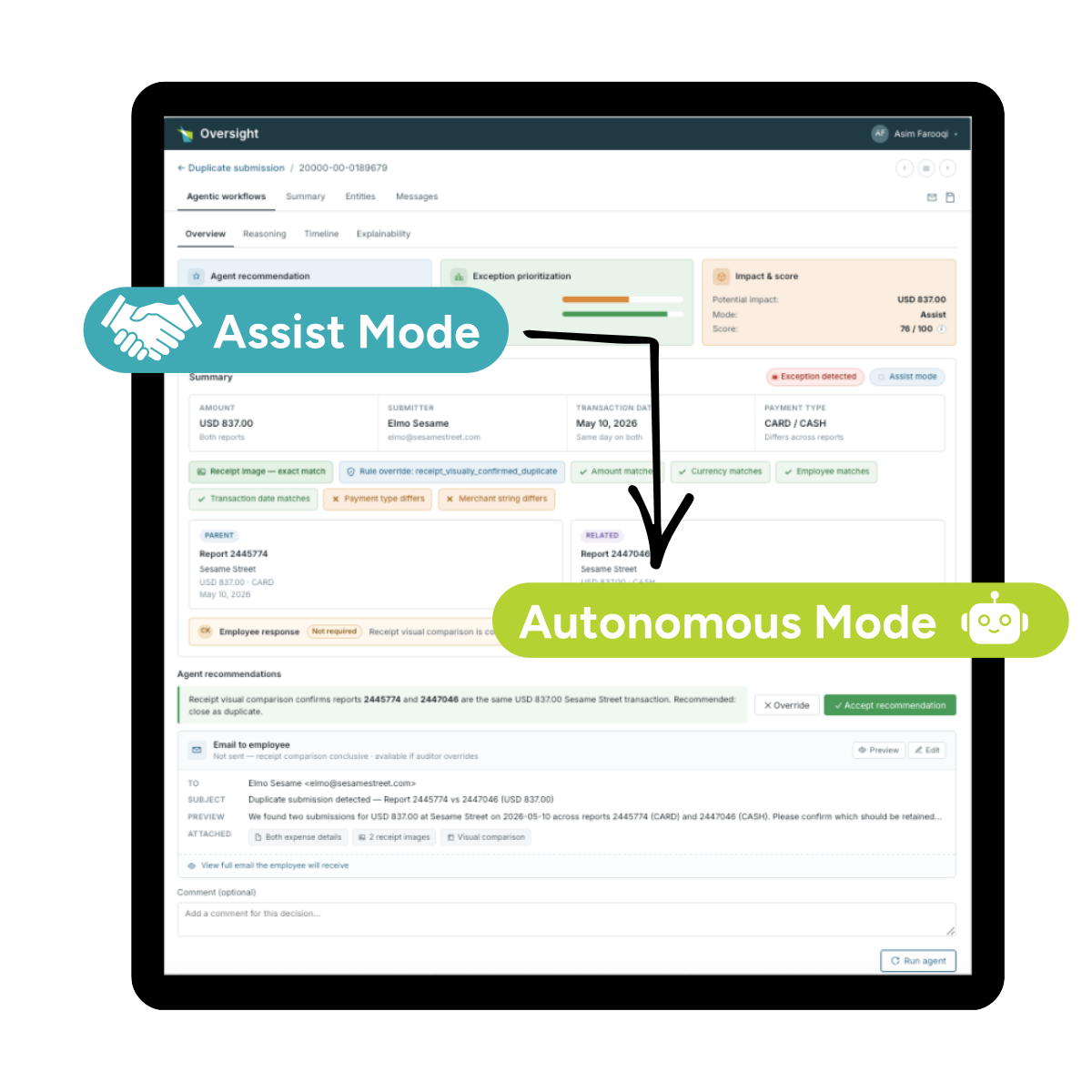
Agents run the follow-up using governed workflows, from outreach and evidence gathering through routing, escalation, review, and approved low-risk resolution. Every step is tied to the finding behind it, and every step leaves a record.
Every action has a reason, a boundary, and a record.
See our agentsWHY OVERSIGHT ACTIONS
Finding the risk is the easy part.
A finding lands in someone's queue, and the real work starts. They pull the transaction history, figure out who owns it, chase the missing receipt, wait, re-check the policy, escalate if it stalls, and write up what they decided. Multiply that across thousands of exceptions and most of a team's time goes to the mechanics of resolution rather than the judgment.
Oversight Actions moves those mechanics into workflows connected to the original risk. The repetitive part shrinks. Your team keeps the visibility and the final say.
WHAT OVERSIGHT ACTIONS HANDLES
Oversight Actions moves those mechanics into workflows connected to the original risk. The repetitive part shrinks. Your team keeps the visibility and the final say.
Summarizes the issue
Pulls the finding, its evidence, the history, and the relevant policy into one place so a reviewer isn't rebuilding context from scratch.
Recommends the next step
Suggests an action based on the risk, the policy, who owns it, and how the workflow is set up.
Requests what's missing
Reaches out for the receipt, the approval, or the explanation, in the context of the specific exception.
Routes to the right owner
Assigns the work by risk level, role, threshold, and resolution path.
Escalates when it should
Sends complex, overdue, or high-risk issues to the reviewer who should see them.
Resolves approved low-risk items
Completes well-defined steps when confidence is high and your controls allow it.
HOW IT STAYS GOVERNED
Every action stays inside the boundaries you set.
Oversight Actions is not open-ended automation. It works on one thing: risk that Oversight has already identified. And it works within one set of rules, the policies, thresholds, exclusions, permissions, approvals, and escalation paths your team configures. You decide what it can touch and where a person has to weigh in. Every recommendation, automated step, and decision traces back to the finding that started it.

WHY ITS DIFFERENT
Automation moves tasks. Oversight acts on risk.
RPA and workflow tools pass work from one step to the next. General-purpose AI agents can take on broad tasks. Neither one starts from finance risk. They don't know why a transaction was flagged, which policy applies, what the threshold is, or how the last case like it was resolved.
Oversight Actions starts there. It inherits the risk context, the policy logic, and the case history from the platform that found the issue. That's what makes the action defensible: you can explain it to a controller, an auditor, or a regulator, and point to the finding behind it.
USE CASES
Start where the policy is already clear.
The best first workflows are high-volume and low-judgment, where the rule is written down and the risk is well understood.
Chasing missing receipts and documentation
Routine follow-up with employees or vendors
Summarizing an exception and its history for a reviewer
Routing and escalating by risk, value, or repeat behavior
Resolving approved low-risk items within threshold
Coaching employees on policy after a flag
THE PAYOFF
Resolve more risk with the same team.
Less time on the mechanics of resolution, more on the judgment calls
A shorter path from finding to closed
The same policy applied the same way, every time
Audit-ready by default, because every action is logged as it happens
THE OUTCOME
Put Finance Risk Intelligence into controlled action.
Oversight Actions takes the risk you already see and moves it toward resolution, inside workflows your auditors will recognize and your team still controls.
See our agents