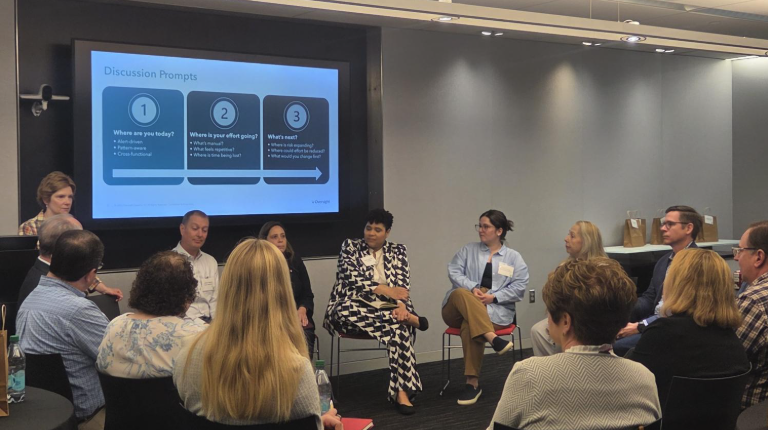
This week, we launched our 2026 Roadshow Series at Coca-Cola’s headquarters in Atlanta. We brought together finance, audit, compliance, and procurement leaders for open and practical conversations about where finance risk management is going next.
What stood out to me was not just the diversity of perspectives, but the consistency in what teams are trying to achieve. Regardless of structure, systems, or maturity, the conversations pointed to three outcomes that matter most:
Greater intelligence. Increased efficiency. Clearer visibility.
These priorities are not new. What is changing is the urgency and the expectation to deliver on them in more complex environments.
Intelligence: Moving Beyond Detection to Understanding
Many of the practitioners I spoke with described their role as reporting on risk rather than managing it. That distinction is real, especially in organizations where teams sit within procurement but work closely with compliance and risk leadership.
At the same time, expectations are evolving.
Leaders are not only asking what happened. They want to understand why it happened, where patterns are forming, and what it means for the business moving forward.
That level of understanding is difficult to achieve in environments where data is fragmented across dozens or even more than 160 ERP systems. It is even more difficult when insights remain isolated within individual business units.
What I heard clearly is a need for stronger intelligence that can:
- Connect signals across divisions
- Show how smaller issues build into larger patterns
- Provide context that supports better decision making
- Reviewing exceptions one at a time
- Following up on documentation such as receipts
- Reconciling data across disconnected systems
- Support that helps them review faster and with greater confidence
- Guidance that reduces inconsistency in decision making
- Automation that expands coverage without adding complexity
- Where are we seeing the most risk?
- Are we improving over time?
- What is the financial and operational impact?
- Accuracy, so teams can trust the findings and avoid the perception of targeting employees unfairly
- Clear audit trails that explain why decisions were made
- The ability to feed insights back into systems such as Concur so that context is not lost
- Intelligence that brings context and connection to their data
- Efficiency that allows their teams to focus on meaningful work
- Visibility that helps them communicate impact with confidence
There was also strong interest in benchmarking. Teams want to understand how their decisions and outcomes compare to peers, especially in situations where policy leaves room for interpretation.
During the session, we also shared how we are thinking about the next phase of intelligence at Oversight. This includes early work on agentic capabilities and AI-driven insights that can summarize activity, highlight emerging risks, and help teams quickly understand what matters most.
The reaction was consistent. Teams are not looking for more data. They are looking for clearer interpretation and faster understanding.
This is where agentic AI is starting to play a meaningful role. Not as a replacement for human expertise, but as a way to support more consistent decisions, surface patterns earlier, and help teams learn from a broader set of experiences.
Efficiency: Enabling Teams to Focus on What Matters Most
Efficiency came up in nearly every conversation, but not in the way it is often framed.
This is not about reducing effort for the sake of it. It is about making sure teams can spend their time on work that truly requires their expertise.
Today, many teams are still spending significant time on manual processes:
In some cases, the least experienced team members are responsible for handling the highest volume of exceptions. That creates challenges in both consistency and scalability.
What practitioners are looking for is a more thoughtful progression:
There is also a broader context here. Talent is stretched. Expertise is unevenly distributed. The volume of data continues to grow.
Improving efficiency is one of the most direct ways organizations can give time back to their teams so they can focus on investigation, advisory work, and strengthening controls.
Visibility: Creating Clarity and Telling the Right Story
If there was one area where teams expressed the most frustration, it was visibility.
Not visibility into individual transactions, but into what those transactions mean when viewed together.
Leaders are asking very practical questions:
And increasingly, they want to understand the return on every investment.
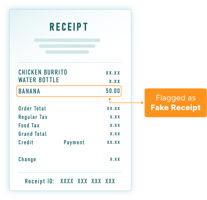
Many teams are uncovering meaningful issues. These include user created exceptions, altered receipts, and patterns that indicate broader control challenges. The difficulty is connecting those findings into a clear and credible story.
Visibility depends on a few critical elements:
What also resonated strongly was the need for better summarization and communication of insights. Teams want to be able to quickly translate detailed findings into clear narratives that leadership can understand and act on.
This is another area where AI-driven summaries and reporting will play an important role. Not to replace analysis, but to make it easier to surface the signal within the noise and communicate it effectively.
Ultimately, visibility is not just about seeing more.
It is about seeing clearly enough to act and to explain why it matters.
Where We Go From Here
What I appreciated most about our time at Coca-Cola was the openness of the dialogue. Teams were candid about what is working, where they are challenged, and what they need next.
The direction is clear.
Organizations are looking for:
At Oversight, these conversations directly shape how we move forward. Our role is not just to provide technology, but to be a partner in helping our clients navigate these challenges in a way that works for their environment and their teams.
As we continue to invest in agentic capabilities and AI-driven insights, our focus remains on making these advancements practical, trusted, and aligned to the realities our clients shared with us this week.
As we continue this roadshow series, I am looking forward to hearing how these themes show up in other regions.
The challenges are real, but so is the progress. And the more we learn from each other, the better equipped we all are to move forward with confidence.





.png?width=400&height=200&name=image%20(4).png)